
You can’t make a 35-square-foot bathroom bigger without moving walls — but you can make it feel significantly larger by removing visual boundaries: continuous flooring, large-scale tile, oversized mirrors, layered light, and a restrained palette. These tricks genuinely work. They just don’t work miracles, and anyone selling miracles is selling something.
Every trick below does one of three things: extends sightlines, bounces light, or reduces visual clutter. That’s the entire physics of “looking bigger.” Keep that framework in mind and you’ll be able to judge any idea — including the ones we didn’t list — on your own.
Key takeaways
– Large-format tile with minimal grout lines makes floors and walls read as continuous surfaces.
– Run one flooring and one wall color through the whole room — every material change is a visual wall.
– An oversized mirror and layered lighting deliver the most perceived space per dollar.
– Floating fixtures (vanity, toilet) reveal floor underneath, which the eye reads as room.
– Honest limit: tricks improve feel by maybe 20–30% — they don’t change clearances, storage, or function.

1. Tile Scale: Bigger Tile, Fewer Grout Lines
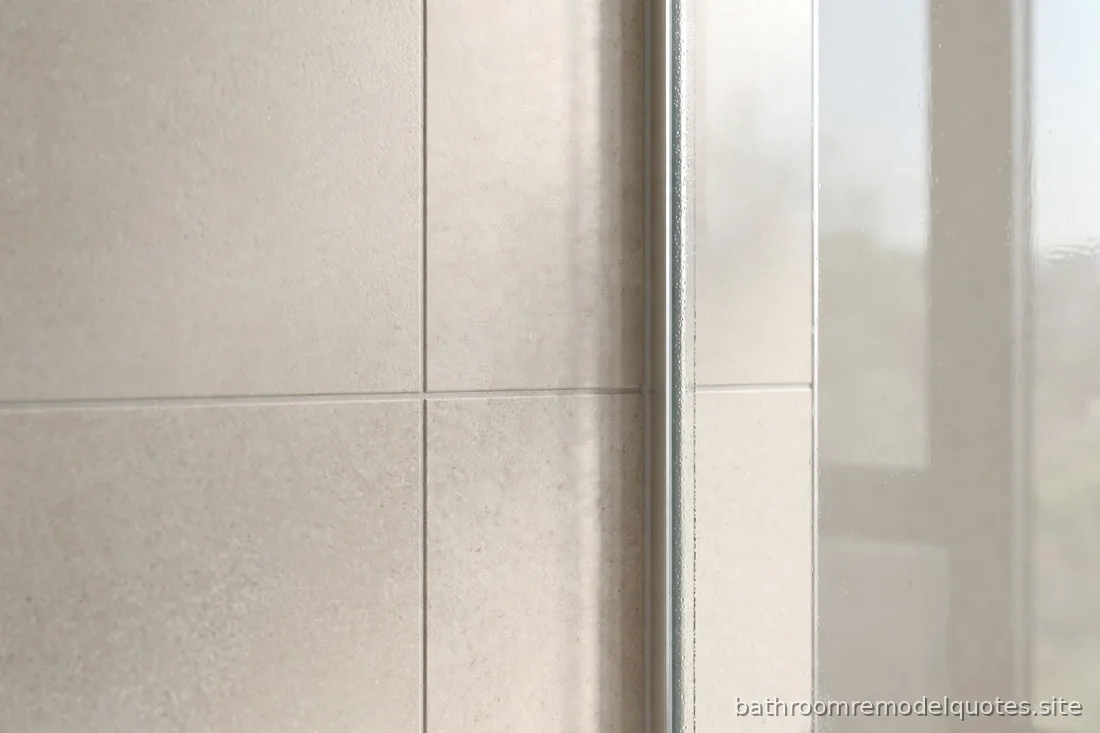
Small tile with heavy grout grids chops a floor into dozens of visual units; the eye counts them and concludes “small.” Large-format tile — 12×24 inches on floors, even larger on walls — with tight, color-matched grout joints reads as one continuous surface. The room doesn’t get bigger; the number of things telling your brain it’s small gets smaller.
Two practical notes: large tile needs a flat substrate (lippage on uneven floors looks worse than small tile ever did), and installation labor runs higher per square foot for big formats. In a 35-square-foot bath the material savings of fewer tiles roughly offset the labor premium — but confirm with your tile setter before committing. Our bathroom tile cost guide breaks down the format pricing.
2. Continuous Flooring and Color Flow
Run the same flooring from the doorway straight through — no threshold strip, no accent border, no “feature” medallion in a room this size. If the hallway outside has wood-look flooring, carrying a similar tone into the bath extends the sightline past the doorway. Same principle on walls: one wall color everywhere, including the ceiling in a slightly lighter tint of the same color. Every transition is a full stop for the eye; in a small room you can’t afford full stops.
3. Glass Over Curtains, Frameless Over Framed
A shower curtain — even a nice one — is a visual wall that cuts the room in two. Clear glass lets the eye travel to the back wall of the shower, effectively adding the shower’s depth to the perceived room. Frameless panels do this best (no dark metal grid chopping the view), but even a simple fixed glass panel beats a curtain. Budget reality: frameless glass is a splurge (often $1,000–$2,500 installed for a panel or door). A $40 curved shower rod with a light, simple curtain gets you partway there for almost nothing — the curve adds elbow room and the light fabric disappears visually.
4. Color Discipline: Light, Warm, and Limited
Light colors reflect more light — that’s physics, not opinion. But “light” doesn’t have to mean sterile: warm whites, pale greige, soft sage, and light warm gray all expand a room without the operating-room chill of pure white. The discipline part matters more than the hue: two to three finishes total in a small bath. Floor, walls, one accent — then stop. A different tile in the niche, a contrasting vanity, patterned floor and patterned walls: each addition is another boundary, and boundaries shrink.
One exception worth knowing: a dark, moody small bathroom — deep green or charcoal walls — can look intentionally jewel-box rather than cramped, if the lighting is excellent and the fixtures are light. It’s high-risk, high-reward. If your lighting is one sad overhead, don’t attempt it.
5. Mirrors: The Cheapest Square Footage
A mirror does two jobs: it doubles the light in the room and it doubles the perceived depth. The standard 24-inch builder mirror does neither well. Go as large as the wall allows — a mirror spanning the full vanity width, hung to just below the light fixture, transforms the room. Angi’s component data puts installed mirrors at $160–$460, and even the low end of that range buys a dramatic upgrade. (Angi) Frameless or thin-framed keeps it clean; a heavy ornate frame reintroduces the visual bulk you just eliminated. And keep it clean — a spotted, streaked mirror in a small bath reads as grime, not glamour.
6. Lighting That Erases Shadows
Small bathrooms are usually lit by a single overhead fixture that throws shadows into every corner — and shadowed corners read as walls closing in. The fix, detailed in our small bathroom ideas guide, is layers: bright diffused overhead, face-height task lighting beside the mirror (sconces flanking the mirror beat a single bar above it for shadow-free faces), and optionally a soft LED strip under a floating vanity that makes the cabinet appear to hover. Daylight helps enormously too — if there’s a window, don’t cover it with a heavy treatment; frosted film gives privacy without stealing light.
7. Show More Floor
The eye judges room size largely by visible floor area. Everything that hides floor — a bulky vanity to the ground, a toilet with a wide base, clutter — shrinks the room. Floating vanities and wall-hung toilets reveal floor underneath; a pedestal sink reveals even more (at the cost of storage — the eternal trade-off). Keep the floor itself clear: no bath mats piled in corners, no laundry baskets living permanently in the room, cleaning supplies behind a door. Visible floor is free square footage.
8. Draw the Eye Up
Vertical lines and tall elements make ceilings feel higher: floor-to-ceiling shower tile instead of a wainscot-height surround, a tall narrow mirror, vertical subway tile stack, a high-mounted showerhead on a slide bar. Even painting the ceiling a bright white while walls carry color lifts the perceived height. Conversely, a horizontal chair rail or a dark wainscot line visually lowers the ceiling — fine in a grand bath, counterproductive here.
9. Ruthless Editing
This one costs nothing and outperforms most renovations: remove everything that doesn’t need to be visible. Countertop appliances of clutter — the six bottles, the spare rolls, the cleaning caddy — each one is a visual object the brain counts. Corral daily items into one tray or drawer. Decant the ugly bottles. One piece of art or one plant (real or convincingly fake), not a gallery wall. A small bathroom with clear surfaces feels twice the size of the same room with cluttered ones. This isn’t minimalism as a lifestyle brand — it’s optics.
5 Under-$100 Wins for This Weekend
Not ready for tile and glass? These five moves cost almost nothing and deliver a visible difference by Sunday evening:
- Swap to the brightest daylight bulbs the fixtures allow. Most small baths are under-lit simply because nobody ever changed the bulbs. Daylight-temperature LEDs (around 5000K) make white tile look whiter and the room feel cleaner.
- Remove the shower curtain and replace it with a light one — or just take down the dark patterned curtain that’s been there since 2019. A $25 white or frosted curtain changes the room’s light instantly.
- Clear every horizontal surface. Everything on the vanity, the toilet tank, and the tub edge goes into a box. Live with the clear surfaces for a week; put back only what you actually reached for.
- Hang the largest mirror you can fit. Even a $60 big-box mirror, centered and hung at eye level, outperforms the medicine-cabinet mirror it replaces.
- Paint the ceiling bright white. In many small baths the ceiling has yellowed or was never painted properly. One quart of ceiling paint and an hour on a step stool lifts the whole room.
None of these changes the floor plan. All of them change how the floor plan feels — which, for a weekend and a hundred bucks, is a fair trade.
The Honest Limits
Now the part most design content skips. These tricks improve perceived spaciousness — call it 20–30% better feel when done well. They do not:
- Change clearances. If the door hits the toilet, no mirror fixes it. That’s a layout problem needing a layout solution (pocket door, fixture relocation).
- Add storage. Visual tricks don’t create cubic feet. If the problem is “nowhere to put towels,” you need the storage ideas in our small bathroom remodel ideas guide, not a bigger mirror.
- Fix bad light. Tricks multiply existing light; they don’t create it. A windowless bath with one dim fixture needs more fixtures first, mirrors second.
- Substitute for scale-appropriate fixtures. An oversized vanity in a tiny bath looks wrong no matter how light the paint. Right-size first, decorate second.
- Fool anyone for long. Guests notice a beautiful small bathroom; they also notice it’s small. The goal isn’t deception — it’s making the smallness feel intentional and comfortable rather than cramped and apologetic.
And the deepest honest limit: at some point the answer is a bigger bathroom. If two adults can’t comfortably use the space simultaneously and the household needs them to, no design trick resolves a programmatic mismatch. That’s a renovation conversation (or a second-bath conversation), and our small bathroom cost guide prices it — small-bath projects average about $6,500 nationally, with full guts reaching $15,000+, because every trade still shows up in a tiny footprint. (USA Cabinet Store)
Frequently Asked Questions
What color makes a small bathroom look bigger?
Light, warm neutrals — warm white, pale greige, soft sage, light warm gray. They reflect the most light. More important than the specific color: use as few colors as possible and carry the wall color onto the ceiling in a lighter tint.
Does dark tile make a small bathroom look smaller?
Usually, yes — dark surfaces absorb light and advance visually, making walls feel closer. The exception is a deliberately moody design with excellent lighting, which can read as “jewel box” rather than “cave.” Without great lighting, stick with light.
Should a small bathroom have a big mirror or a small mirror?
Big — as large as the wall above the vanity allows. A large mirror doubles light and perceived depth; a small mirror in a small bath just emphasizes the smallness. Keep the frame thin or frameless.
Is a glass shower door better than a curtain in a small bathroom?
Visually, yes — clear glass extends sightlines to the shower’s back wall. Practically, curtains are cheaper, easier to replace, and need no swing clearance. A curved rod with a light curtain is the budget compromise that gets most of the benefit.
Can lighting really make a bathroom feel bigger?
Yes — it’s the highest-impact trick on this list. Layered light (overhead + face-height task + optional accent) eliminates the shadowed corners that make small rooms feel closed in. A few hundred dollars in fixtures can change the feel more than a few thousand in tile.
This is general information, not professional advice — get itemized bids for your project.