
Bathroom tile costs $10–$50 per square foot installed in 2026, and a typical bathroom retiling project runs $450–$8,000, averaging about $2,000. Ceramic and porcelain land at $10–$45 per square foot installed; natural stone runs $9–$54. The tile itself is only part of it — materials run $2–$30 per square foot plus labor at $8–$20 per square foot.
Tile is the line item homeowners underestimate most often, because they price the tile and forget the setting. The material invoice and the labor invoice move together: a fancier tile needs a flatter substrate, more cuts, and more grout lines. This guide prices materials, labor, patterns, and placement separately — shower versus floor versus wall — so you can see the whole picture.
Key takeaways
– Budget $10–$50/sq ft installed for bathroom tile; the project average is about $2,000.
– Porcelain ($14–$45 installed) is the sweet spot for bathrooms: dense, low-maintenance, water-resistant.
– Shower tile costs more than floor tile — waterproofing, precision cuts, and tighter tolerances.
– Labor runs $4–$8/sq ft for ceramic/porcelain and $6–$15+/sq ft for natural stone.
– Fancy patterns (herringbone, diagonal) and tiny mosaics add labor cost and material waste.
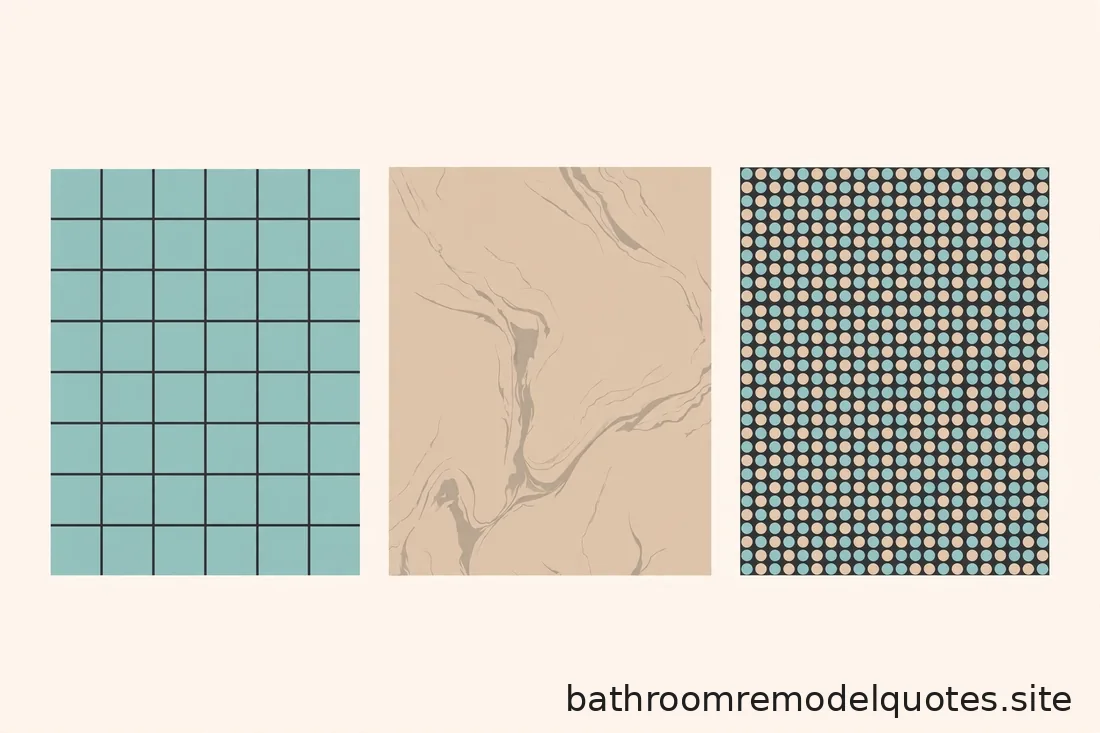
Ceramic vs. Porcelain vs. Stone: Installed Pricing
Angi’s 2026 retiling data prices bathroom tile by material, installed — meaning tile, setting materials, and labor together:
| Tile material | Cost per sq. ft., installed | Character |
|---|---|---|
| Vinyl tile | $1–$15 | Most affordable; not a true ceramic |
| Terracotta | $5–$15 | Warm, rustic; needs sealing |
| Slate | $9–$38 | Natural cleft texture; adds character |
| Ceramic | $10–$45 | Classic, durable, huge style range |
| Granite | $11–$42 | Hard, polished natural stone |
| Travertine | $12–$53 | Soft stone look; needs sealing |
| Porcelain | $14–$45 | Dense, low-maintenance, water-resistant |
| Pebble | $30–$40 | Natural texture; labor-intensive grouting |
| Marble | $11–$54 | Elegant; softer, stains and etches |
| Glass | $10–$100 | Luminous; most expensive to set well |
Source: angi.com (Aug 2026).
The three materials that matter for most bathrooms:
Ceramic ($10–$45 installed). The workhorse. Glazed ceramic is non-allergenic, extremely durable for walls and floors, and comes in every style from $1 subway tile to designer encaustic looks. For walls and low-traffic floors, it’s the value pick.
Porcelain ($14–$45 installed). Denser and less porous than ceramic, which makes it the better choice for shower floors and wet areas. It also does the best impression work — porcelain that mimics marble or wood delivers the look for a fraction of natural stone’s price and maintenance. The “same look, far less upkeep” argument is why porcelain dominates 2026 bathroom specs.
Natural stone ($9–$54 installed). Marble, travertine, slate, and granite bring a one-of-a-kind surface — and one-of-a-kind maintenance. Stone is softer, needs periodic sealing, can stain and etch, and costs more to install ($6–$15+ per square foot in labor alone versus $4–$8 for ceramic and porcelain). Buy it for the look you can’t get any other way, not to save money. (angi.com)
HomeAdvisor’s shower-material data adds useful material-only benchmarks: porcelain tile $2–$30 per square foot, stone tile $5–$100, glass tile $20–$50, and cultured marble $40–$65. (homeadvisor.com)
Shower vs. Floor vs. Wall: Placement Pricing
Where the tile goes changes the price as much as which tile you pick. Angi’s 2026 placement data:
| Location | Cost per sq. ft. | Typical project average |
|---|---|---|
| Bathroom floor | $7–$25 | $800–$7,000 |
| Bathroom wall | $7–$25 | $800–$8,000 |
| Shower floor | $5–$25 | $500–$1,000 |
| Shower wall | $5–$25 | $800–$2,600 |
| Walk-in shower (all-in) | $5–$25 | $800–$3,000 |
Source: angi.com (Aug 2026).
Shower tile is the most demanding work in the room. It costs more than floor tile for three specific reasons: the mandatory waterproofing membrane behind it, the precision cuts around valves, showerheads, and niches, and the tighter tolerance for a watertight installation. A standard shower surround averages about $2,700 in 2026 data, with a typical range of $1,800–$5,000 — and HomeAdvisor prices shower tiles alone at $1,800–$6,900 depending on material and area. (homeadvisor.com)
Floor tile is comparatively straightforward — but bathrooms punish small-format thinking. A 40-square-foot bathroom floor at $15 per square foot is only $600 in tile-setting math, yet installers still charge setup time, detailed cuts around the toilet flange and vanity, and a minimum charge. Small bathrooms cost more per square foot partly for this reason.
Wall tile outside the shower (wainscoting, accent walls) is the easiest tile in the room — no waterproofing membrane, gravity working against the setter but no standing water to fear.
For the full shower build around the tile — pan, waterproofing, glass — see our walk-in shower cost guide.
Labor: Why Setting Costs More Than the Tile
This is the number that breaks budgets: on average, tile materials run $2–$30 per square foot, and then labor adds $8–$20 per square foot on top. This Old House puts professional tile installation labor broadly at $3–$15 per square foot, with the spread entirely about difficulty. (angi.com; bossdesigncenter.com)
Labor rates by material:
– Ceramic and porcelain: $4–$8 per square foot
– Natural stone: $6–$15+ per square foot — heavier, harder to cut, needs sealing
And the prep work nobody prices: removing existing tile costs $2–$7 per square foot (it’s time-consuming, each tile and grout line comes off individually), and subfloor repair or replacement runs $40–$65 per square foot — commonly needed where water damage lurks under old tile. (angi.com)
The practical takeaway: when a tile you love costs $12 per square foot at the store, budget roughly triple that installed — and more for a shower, more for stone, more for intricate patterns.
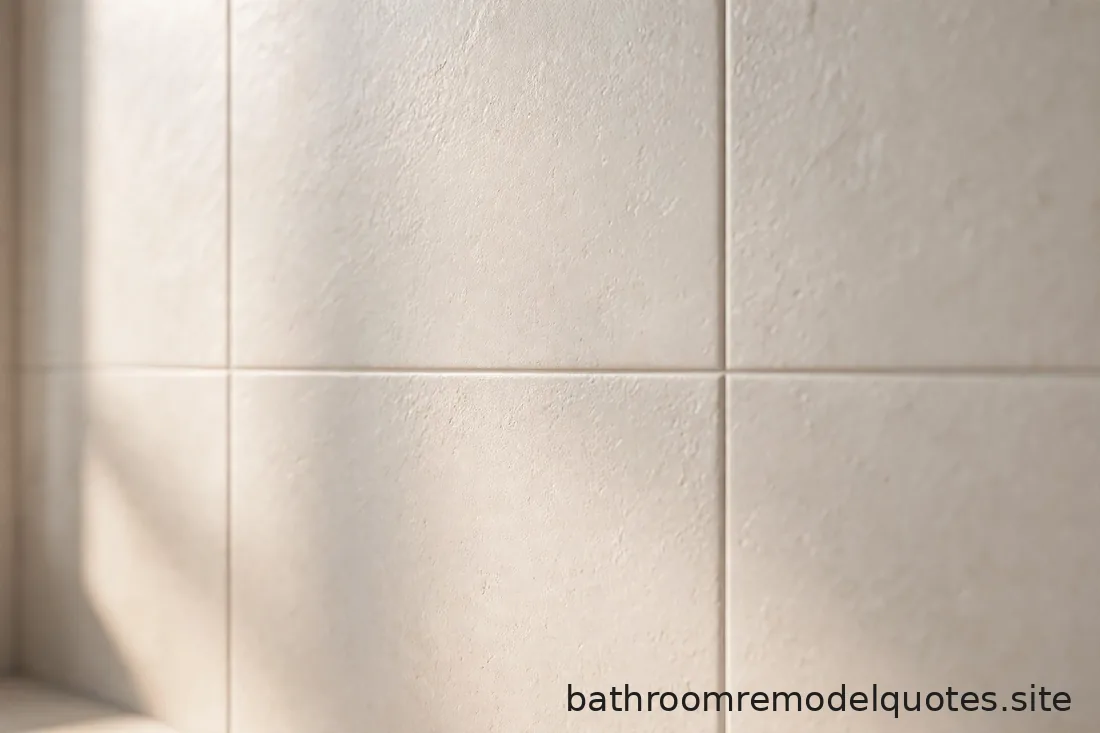
Patterns, Tile Size, and the Waste Factor
The shape and size of your tile moves labor cost independently of the material:
| Pattern | Cost per sq. ft. | Notes |
|---|---|---|
| Straight set | $3–$30 | Fastest; least waste |
| Running bond | $3–$35 | Classic brick pattern; slightly more cutting |
| Mosaic | $3–$36 | Many grout lines; slow to set and grout |
| Diagonal | $4–$36 | More cuts and ~15% waste |
| Herringbone | $4–$36 | Layout-intensive; premium labor |
Source: angi.com (Aug 2026).
Three rules of thumb:
- Large squares in a square room are the cheapest install. Fewer tiles, fewer cuts, fewer grout lines. A 12×24 porcelain in a straight set is the value king of 2026 bathrooms.
- Small and irregular tiles cost more to set than big ones. Mosaics and pebbles need more cuts, more grout, and more patience per square foot — which is why a $5 sheet of mosaic can cost $35 per square foot installed.
- Order 10–15% overage (15–20% for diagonal or herringbone). Cuts, breakage, and dye-lot matching mean the box math never equals the floor math. Running short mid-project risks a visible shade mismatch from a different dye lot.
Three Real-World Tile Scenarios
Sam’s budget floor — Atlanta, Georgia. Sam’s 5×8 hall bath needs a new floor only. Ceramic 12×12 at $3 per square foot ($120 in tile), plus $500 in setting labor, thinset, and grout for the 40 square feet, plus $150 for toilet removal and reset. One-day job. Quotes: $750 and $950. Final: $820.
The Park family’s shower surround — Chicago, Illinois. A tub alcove gets porcelain subway tile walls: about 80 square feet of wall at $6 per square foot material ($480), waterproofing membrane and backer board ($450), labor at roughly $12 per square foot ($960), plus new valve trim. Two tile setters bid $1,900 and $2,400. They take the $1,900 bid — and confirm the waterproofing system by name before signing. Final: $1,900, two days.
Nadia’s marble primary — Boston, Massachusetts. A primary bath floor and shower walls in honed marble: 120 square feet of tile at $18 per square foot material ($2,160), stone-setting labor at $14 per square foot ($1,680), premium waterproofing ($700), sealing ($200), and $400 for removing the old tile. High-cost metro, premium material. Two bids: $4,800 and $5,900. Final: $5,200 — and she budgets resealing every couple of years, because marble is a relationship, not a purchase.
Questions to Ask Your Tile Setter
- What’s your waterproofing system for the shower? Name and brand, not “waterproof stuff.”
- Is removal of the old tile included? At $2–$7 per square foot, it’s a real line — confirm whose it is.
- How do you handle the subfloor? If it’s not flat or it’s damaged, who’s paying the $40–$65 per square foot repair?
- What’s your overage and dye-lot policy? Confirm 10–15% extra from the same lot, in writing.
- Do you seal natural stone — and is it included? Sealing is maintenance stone needs; know whether the first round is in the bid.
For how tile fits the whole-project budget, see our 2026 bathroom remodel cost guide — and if you’re weighing tile against other floors, our bathroom flooring options compared covers LVP and heated floors too.
Frequently Asked Questions
How much does it cost to tile a bathroom?
Expect $10–$50 per square foot installed. A full bathroom retiling averages about $2,000, with most projects between $450 and $8,000 depending on size and material. (angi.com)
Is porcelain or ceramic tile cheaper?
The material is comparable — both are widely available at low per-square-foot prices. Installed, ceramic runs $10–$45 and porcelain $14–$45 per square foot. Porcelain costs slightly more but earns it back in wet areas with better water resistance and lower maintenance. (angi.com)
Why does shower tile cost more than floor tile?
Three reasons: the waterproofing membrane behind it ($450–$750 for membrane and labor), precision cuts around valves and niches, and tighter tolerances for a watertight installation. Shower tile runs $5–$25+ per square foot installed, and premium materials or complex patterns push past $50. (angi.com)
How much extra tile should I order?
Order 10–15% over your measured area — 15–20% for diagonal or herringbone patterns. The overage covers cuts, breakage, and dye-lot consistency. Running short risks a visible shade mismatch.
Can I tile over existing tile?
Sometimes, on walls in good condition — but it adds weight, raises surfaces (a problem at doorways and fixtures), and hides whatever’s failing underneath. Most pros prefer a clean substrate, especially in showers. Get the setter’s recommendation in writing either way.
This is general information, not professional advice — get itemized bids for your project.